

Sécurité, qualité, maîtrise des coûts sont nos priorités pour vous satisfaire.
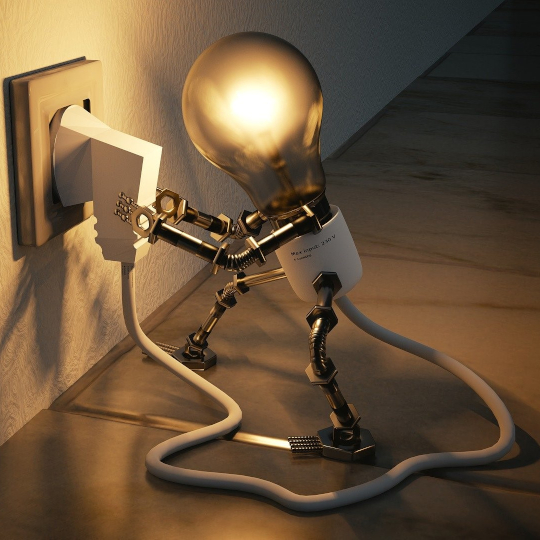
De la prise de courant à la rénovation ou la création complète de votre installation, confiée nous votre projet.
Éclairage, chauffage, courant faible, maison connectée et domotique, particuliers ou professionnels, faites votre choix !

pills
/ Replyazithromycin 200
Viagra
/ ReplySex
Josephvaw
/ Replymueller
mueller
mueller
mueller
mueller
mueller
mueller
mueller
mueller
mueller
mueller
mueller
mueller
mueller
mueller
last news about muller
mueller
mueller
mueller
mueller
mueller
mueller
mueller
mueller
mueller
mueller
mueller
mueller
mueller
mueller
mueller
musicians
/ ReplyMusic sheets and scores give the necessary direction for artists to play pieces
correctly.
Understanding Music Sheets and Scores
Music manuscripts and scores contain the documented representation of musical works.
Elements of Music Sheets and Scores
1. **Stave:** The set of five lines and four spaces that represent different musical pitches.
2. **Symbols:** Signs that designate the pitch range for notes on the staff.
3. **Tones:** Symbols denoting the pitch and duration of a musical sound.
4. **Rests:** Symbols used to indicate moments of silence in a piece.
5. **Rhythm:** Indicates the metric structure of a piece.
6. **Tonality:** Indicates the key of the music by specifying which notes are sharp or flat.
7. **Intensity:** Indications of the volume
of the music.
8. **Expression:** Instructions on how to perform each note
or phrase.
9. **Speed:** The rate of the music’s execution.
10. **Decorations:** Symbols showing extra notes for decorative purposes.
Reading Music Sheets and Scores
Understanding music sheets and scores requires awareness
of the various elements and signs used.
Benefits of Learning to Read Music Sheets and Scores
1. **Improved Knowledge:** Improved knowledge of music sheets leads to a better grasp of music theory.
2. **Broader Skill Set:** Greater flexibility in playing different genres and styles is
achieved by reading music.
3. **Better Communication:** Reading music allows for better communication with other musicians.
4. **Archiving:** Written music preserves compositions for future
generations.
5. **Achievement:** The achievement of reading music brings a sense of
personal satisfaction.
Tips for Beginners
1. **Keep it Basic:** Begin with simple pieces and gradually move to more complex ones.
2. **Consistent Practice:** Consistent practice helps reinforce learning.
3. **Take Advantage of Tools:** Take advantage of available resources to aid in learning.
4. **Seek Support:** Seek support from others who are also learning to read music.
5. **Stay Persistent:** Keep trying and don't give up,
even when it gets tough.
Advanced Techniques
1. **On-the-Spot Playing:** Instant interpretation of music without needing to practice beforehand.
2. **Modulating:** The process of changing the key of a
piece of music.
3. **Harmonization:** Building chords to accompany
a musical piece.
4. **Ad-Libbing:** Ad-libbing music as it is played.
5. **Expressive Playing:** Playing written music with personal flair
and expressiveness.
Famous Composers and Their Scores
1. **L. Beethoven:** Known for his complex and emotionally
powerful compositions.
2. **Wolfgang Amadeus Mozart:** Celebrated
for his clarity, balance, and natural elegance in music.
3. **Bach:** Famous for his intricate and harmonically rich
compositions.
4. **P. I. Tchaikovsky:** Famous for his richly orchestrated and emotive
music.
5. **Debussy:** Known for his unique and expressive musical style.
Digital vs. Traditional Music Scores
**Benefits of Digital Music:**
- Accessibility: Easily accessible on various devices.
- Alteration: Easily editable and modifiable.
- Space: Easy to store and organize.
**Pros of Printed Sheets:**
- Tactile Experience: Provides a tangible, hands-on experience.
- Durability: Stands the test of time.
- Artistic Value: Holds artistic and historical significance.
The Role of Technology in Music Scores
Technology has transformed the way we interact with music scores.
**Digital Sheet Music Apps:** Apps designed for digital sheet music make
it easier to compose, edit, and share music scores.
**Online Libraries:** Online libraries provide access
to a wide range of music scores.
**Interactive Learning Tools:** Technology-based tools provide interactive music learning opportunities.
Conclusion
Music sheets and scores are integral to the practice
of musical creation.
Whether you just started or an experienced player, knowing how to read and interpret
music sheets and scores is crucial.
Embrace the process of understanding music sheets and scores, and reveal the potential
they offer.
The history of music sheets is a deep tapestry that stretches across ages.
Early Beginnings
The initial types of music notation go back to ancient civilizations.
Ancient Greeks created rudimentary music notation techniques to preserve their musical practices.
The Greek Contribution
Greek society made notable contributions to music notation.
Medieval Innovations
The medieval period saw substantial advances in music notation.
The Renaissance Era
The Renaissance brought a rebirth of music, including music notation.
Baroque and Classical Periods
During the Baroque and Classical periods, music notation evolved further,
growing more detailed.
The Romantic Era
The Romantic period ushered in novel dynamic techniques
in music notation.
The Modern Age
In the modern era, music notation experienced substantial
changes, integrating technology.
The Digital Revolution
The advent of electronic notation transformed the domain of music notation.
Key Milestones in Music Notation History
1. **Ancient Notations:** Early Egyptian hieroglyphs used to
depict music.
2. **Medieval Notation:** Guido d'Arezzo's revolutionary contributions to music
notation.
3. **Baroque Notation:** Evolution of musical scores in the Classical era.
4. **Expressive Notation:** Increased complexity and detail in Romantic music
notation.
5. **20th Century:** Adoption of digital notation tools in contemporary music.
The Role of Music Sheets in Education
Music sheets act as a important role in music pedagogy.
Notable Composers and Their Contributions
1. **J.S. Bach:** Known for his complex and detailed musical scores.
2. **L. Beethoven:** Innovated in the use of dynamic and expressive notations.
3. **W.A. Mozart:** Excelled in the Classical era's precise and
clear notation.
4. **Chopin:** Innovated in the expressive notation for piano
compositions.
5. **Igor Stravinsky:** Known for his groundbreaking 20th-century
notational techniques.
Evolution of Music Sheets in the Digital Age
The contemporary period has dramatically changed the method we interact with music
sheets.
Future of Music Sheets
The coming age of music sheets foresees exciting innovations.
As technology advances, the tools composers
use to compose and distribute music sheets will so too evolve.
Conclusion
The history of music sheets is rich, showcasing the
progress of music itself.
From ancient symbols to digital scores, music sheets have been a crucial means for recording and transmitting melodies.
As we progress, the legacy of music sheets will continue, changing with future advancements.
}
Music sheets have a long history that spans over centuries.
Early Beginnings
The initial types of music notation trace back to prehistoric times.
Ancient Mesopotamians created simple music notation systems
to preserve their musical practices.
The Greek Contribution
Ancient Greece made important improvements to music notation.
Medieval Innovations
The Middle Ages witnessed considerable developments in music notation.
The Renaissance Era
Renaissance brought a resurgence of culture, including music notation.
Baroque and Classical Periods
During the Baroque and Classical periods, music notation evolved further, becoming
increasingly detailed.
The Romantic Era
The Romantic age ushered in novel expressive methods in music notation.
The Modern Age
In the modern era, music notation experienced major
changes, integrating electronic systems.
The Digital Revolution
The arrival of electronic notation changed the landscape of music notation.
Key Milestones in Music Notation History
1. **Primitive Symbols:** Cuneiform tablets from Mesopotamia that documented
early music.
2. **Medieval Notation:** Guido d'Arezzo's revolutionary contributions
to music notation.
3. **Baroque Notation:** Advancements in notational precision during the Renaissance.
4. **Expressive Notation:** Increased complexity and detail
in Romantic music notation.
5. **Contemporary Techniques:** Revolutionary changes in music notation practices
in the modern age.
The Role of Music Sheets in Education
Music sheets play a important role in learning music.
Notable Composers and Their Contributions
1. **J.S. Bach:** Renowned for his elaborate and accurate notation techniques.
2. **Ludwig van Beethoven:** Innovated in the use of dynamic and expressive notations.
3. **Mozart:** Mastered the Classical style of clear and elegant notation.
4. **Chopin:** Innovated in the expressive notation for piano compositions.
5. **I. Stravinsky:** Known for his groundbreaking 20th-century notational techniques.
Evolution of Music Sheets in the Digital Age
The contemporary period has profoundly transformed the approach we use
music sheets.
Future of Music Sheets
The future of music sheets foresees intriguing advancements.
As technology proceeds to evolve, in parallel will
the methods composers use to compose and share music sheets.
Conclusion
The history of music sheets holds depth, reflecting the advancement of music
itself.
From primitive notations to electronic sheets, music sheets have been a
vital medium for documenting and sharing
compositions.
As we move forward, the story of music sheets will continue, evolving with technological progress.}
Mastering music sheets is crucial for all aspiring musician. | Mastering how to read
music sheets is vital for every aspiring musician. | Learning the art of reading music sheets is vital for any novice musicians.}
What Are Music Sheets?
Music sheets act as written representations of musical notations,
displaying the note as well as pace of a music work.
Getting Started with Music Sheets
Learning to read music sheets starts with familiarizing yourself
with the basic elements of music notation.
Understanding Musical Notation
Music notation involves many key elements, including notes, staff,
rhythms, and clefs.
The staff of is the foundation in musical notations.
In music notation, this staff is made up of five distinct flat lines and four spaces.
2. **Clefs
This indicate what note on the staff corresponds to the five lines as well as, spaces.
| Clefs indicate the musical note the actual note for the lines and these
five spaces. | Clefs is meant to these lines and spaces.}
{There {are actually|actually are|is} {two|two separate|two distinct} {primary|different|distinct} {clefs|clef|music notes} {used in|used in various|used in the} {music|musical} {notation|notes|notations}.
| There {are actually|actually are|is} {two|two separate|two distinct} {primary|different|distinct} {clefs|musical notes|clef} {used in|used in various|used in the} {notations|music|musical} {of|music} {these notes|these notes}.
craiglistforsex
/ ReplyJG
Caliburn g2
/ ReplyGreetings! I've been reading your web site for some time now and finally got the bravery to go ahead and give you a shout out from New Caney Texas! Just wanted to say keep up the good job!
Josephvaw
/ Replymueller
mueller
mueller
mueller
mueller
mueller
mueller
mueller
mueller
mueller
mueller
mueller
mueller
mueller
mueller
last news about muller
mueller
mueller
mueller
mueller
mueller
mueller
mueller
mueller
mueller
mueller
mueller
mueller
mueller
mueller
mueller
Josephvaw
/ Replymueller
mueller
mueller
mueller
mueller
mueller
mueller
mueller
mueller
mueller
mueller
mueller
mueller
mueller
mueller
last news about muller
mueller
mueller
mueller
mueller
mueller
mueller
mueller
mueller
mueller
mueller
mueller
mueller
mueller
mueller
mueller
Caliburn vape
/ ReplyHiya, I am really glad I have found this information. Today bloggers publish only about gossips and web and this is really annoying. A good blog with exciting content, this is what I need. Thank you for keeping this web site, I'll be visiting it. Do you do newsletters? Can't find it.
Josephvaw
/ Replymueller
mueller
mueller
mueller
mueller
mueller
mueller
mueller
mueller
mueller
mueller
mueller
mueller
mueller
mueller
last news about muller
mueller
mueller
mueller
mueller
mueller
mueller
mueller
mueller
mueller
mueller
mueller
mueller
mueller
mueller
mueller